


Understanding Motorcycle Chain Manufacturing and Quality Control
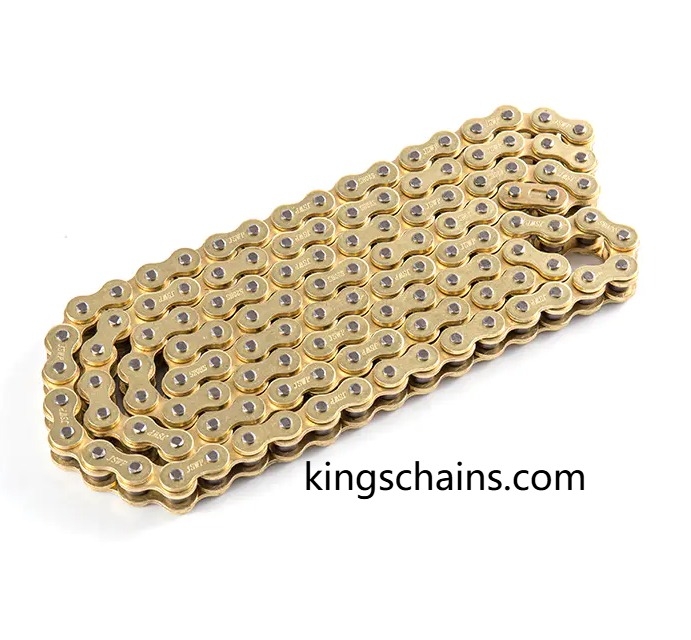
Behind every motorcycle drive chain is a manufacturing process that brings together metalworking, precision assembly, and quality management. When buyers evaluate a Motorcycle Chain Factory, they should look beyond the finished product and consider how materials are selected, components are processed, and production consistency is maintained. These factors influence whether a chain can meet the needs of motorcycle parts distributors, repair workshops, and riders who depend on a compatible drivetrain component for everyday transportation.
Material preparation establishes the foundation for the manufacturing process. A drive chain contains side plates, pins, bushings, and rollers, each of which performs a distinct mechanical role. Steel selection must account for the requirements of these individual components, including their exposure to repeated contact and mechanical stress. Material condition and consistency matter because variations can affect later forming, machining, and heat-treatment operations. Surface preparation also deserves attention, as contaminants or irregularities may interfere with subsequent processing. A carefully managed material supply gives manufacturers a more consistent starting point and supports the quality of the assembled product.
Component processing transforms raw materials into parts that can work together as a chain. Side plates require accurately formed profiles and connecting holes, while pins and rollers need appropriate shapes and surface conditions. Heat treatment can help establish the intended material properties, and finishing operations can improve the consistency of contact surfaces. These processes must be coordinated rather than treated as isolated production steps. For example, a component may be manufactured accurately in shape but still require further inspection to confirm that its surface condition and mechanical characteristics meet the intended requirements. Process control helps manufacturers identify differences before they affect final assembly.
For buyers, evaluating a manufacturing partner begins with understanding the intended application and the supplier's production capabilities. A distributor serving a broad replacement-parts market may need clear product identification, dependable order coordination, and consistent availability across its product range. A workshop sourcing components for specific motorcycles may place greater emphasis on accurate fitment information and access to technical support. Buyers should ask how products are identified, how material and process variations are managed, and what inspection records can be provided. Sample evaluation can also help clarify expectations concerning workmanship, packaging, and the condition of the finished chain before a larger purchasing commitment is made.
Assembly is where individual components become a functioning transmission chain. Pins connect the links, while the bushings and rollers support articulation and engagement with the sprockets. Consistent assembly helps maintain the intended relationship between these parts, allowing the chain to bend around the drivetrain without unnecessary restriction. If component alignment or assembly quality varies, movement may become less consistent and inspection findings may differ across a production batch. Manufacturers therefore need procedures that control component feeding, assembly sequence, joining operations, and final verification. The specific process depends on the chain design, but the objective remains to produce an assembly whose parts function together as intended.
Quality inspection connects manufacturing decisions with the expectations of customers. Depending on the product and the manufacturer's quality plan, checks may address dimensions, surface condition, assembly integrity, material characteristics, and mechanical performance. Visual inspection can identify obvious defects, while other methods may be needed to evaluate characteristics that cannot be confirmed by appearance alone. Traceability and clear documentation can help businesses investigate concerns and maintain consistency between orders. Buyers should ask which inspections are relevant to the products they intend to purchase rather than assuming that every manufacturer follows identical procedures. A clear understanding of quality practices supports more informed supplier comparisons.
Product usability also depends on how manufacturing decisions translate into installation and maintenance. Consistent component movement, clear identification, and appropriate packaging can make a chain easier for workshops and distributors to handle. Packaging should protect the product from contamination and unnecessary damage during storage and transportation. Labels and accompanying information should help users identify the intended application and understand relevant installation requirements. Once installed, the chain still requires correct adjustment, suitable lubrication, and regular inspection according to the motorcycle manufacturer's guidance. Manufacturing quality supports product consistency, but it does not eliminate the need for proper maintenance throughout service.
The design and appearance of a finished chain influence how it is presented to customers and integrated into a broader motorcycle parts range. A uniform metallic finish can communicate a clean, conventional appearance, while selected surface treatments may offer alternatives for particular product lines. Consistency across the plates, rollers, and other visible components can also help the product look well finished. However, appearance should remain secondary to construction, compatibility, and quality assurance. Clear packaging, readable product identification, and an organized presentation can help distributors manage stock and give customers a more straightforward purchasing experience.
Jiangshan Wangpai Chain Industry Co., Ltd. develops and supplies motorcycle and industrial chain products for different market requirements. Businesses exploring sourcing opportunities can discuss intended applications, product identification, manufacturing expectations, inspection documentation, and packaging needs with the company. These conversations can help establish whether a product range aligns with a distributor's inventory strategy or a repair business's replacement requirements. More information about the company's products and manufacturing background is available at https://www.kingschains.com/.
 Spanish
 English
 Arabic
 French
 Portuguese
 Deutsch
 Turkish
 Dutch
 Italiano
 Russian
 Romaian
 Portuguese (Brazil)
 Greek